Picking The Right Paint Finish for Every Room in Your Home

Paint is one of the most affordable ways to express yourself in your home. I love painting… to the point that people find it strange. I find it relaxing and love seeing a space change with a few hours of work and less than a hundred dollars (like, significantly less haha). My dad taught me how to paint, and he’s a jack-of-all-trades. Maybe I like painting so much because he taught me how to cut in a room without having to tape off a wall (I mean… does anyone really enjoy prep work?)

But today’s post isn’t about how to paint. Today we’re talking about the step before you even paint–when you’re standing at the paint counter looking deep into the soul of the 18 year old behind the counter asking you what finish paint do you want.

Skreeeeeech. Paint finish? I just spent the last 3 weeks committing to a paint color, now you’re telling me there are finishes?

Don’t worry, it’s not as scary as it sounds. And it won’t take 3 weeks to commit to a finish. I’m not a paint pro, but after painting every room in my home, and painting rooms at quite a few other houses (plus my dad’s infinite wisdom in my ear 😉 ) I’m here to help you navigate the paint aisle so you can go from terror to purchase!

My Paint Brand Preference

I like Sherwin Williams paint. I love their colors and the numerous options they have for paint applications. However, if you don’t have a good ol’ SW nearby, don’t stress. Most paint brands have the same/similar finishes. (Side tip, most companies can color match any other companies paint colors. If it’s not 100% identical, it’s reallyyyyyy close.) I’ll try to make this cover 95% of the bases. We can’t all swing home runs all the time 😉 Did I get that reference right? Anyway…

Picking Paint Finish by Room/Application

Can I use the same finish paint on all the walls and trim in my house? Sure. Should you… that’s a different story. I’ll give you my general rule of thumb, but you do you at the end of the day. Important note, there are 3 main items you are painting in these rooms:

Walls, Ceiling, Trim. Ok ya, this applies to any room so I won’t keep reminding you of these 3 things for every “room” we cover 😉 What can I say except you’re welcome?

Main Living Areas

What do I mean by this. Quick rundown: a) Family/Living Rooms; b) Den; c) Kitchen; d) Playroom; e) Office; f) Bedroom.

Walls

Alright, walls. You probably have the most of these, unless you’re in a strange wall-less but ceiling and trimmed out room. Congrats, you have a wild home. For main living areas you’re looking for these finishes:

  • Flat/Matte
  • Eg-Shel/Eggshell/Low Luster/Lo-Lustre
  • Satin

These finishes go from less shine to slight shine as you move from flat through to satin. Flat paint can be the least forgiving, but you’ll have no shine. My main living areas in my home are painted flat. In my parents house, we picked an eggshell finish. The upside of eggshell and basically any paint that isn’t flat is that it can be easier to clean. I have dark walls and take a wet cloth to my walls to wipe them down, and I don’t have issues… maybe it’s that Sherwin Williams quality promise 🙂

Ceiling

  • Flat

Do It, go flat. Trust me. Also, if you want white ceilings, pick the whitest color the brand has. In my house, we went with ‘Ceiling Bright White’. It’s pretty but doesn’t draw your eye up, which is what any plain ol’ painted ceiling should do in my opinion.

*Disclaimer, if you are doing a ceiling treatment, you might want a different finish. I’m talking about PLAIN OL’ CEILINGS ❤

Trim/Doors

  • Satin
  • Semi-Gloss (the best choice, IMO)

My personal vote goes to semi-gloss. It’s easy to clean, but isn’t blindingly shiny. It’s a nice appearance for the detailed pieces of the room, while differentiating between your walls.

Bathrooms

Bathrooms have moisture. (Yes thank you Cassidy for that infinitely wise piece of information. You have forever changed my world). Bathrooms that are poorly vented, don’t have fans, or where you don’t keep your window open can get weird water runnies on your walls (wipe those off, please. For the love of your sheetrock and just cleanliness). Because of this, you want to take your paint finishes into consideration differently here.

Walls

You’re best bet for bathroom walls is:

  • Eg-Shel/Eggshell/Low Luster/Lo-Lustre
  • Satin (my personal preference)

Satin is more durable than eggshell, and it’s velvet-like finish will work perfectly for your moisture heavy bathroom. You’ll be able to wipe your walls down without creating weird sheens in the paint.

Ceiling

Ceilings are another space to choose between:

  • Eg-Shel/Eggshell/Low Luster/Lo-Lustre
  • Satin

I like eggshell, because I like the less shine look (notice how I picked flat for regular living areas, I don’t like shiny ceilings), but satin won’t steer you wrong.

Trim/Doors

For bathroom trim, you’ve got:

  • Satin
  • Semi-Gloss (the best choice, IMO)

Just like your regular living areas, I still vote semi-gloss. It’s easy to clean, you can wipe off hair (or dog fur in my case regularly) and it cleans up nicely which dust can collect quickly from all that shower moisture.

Summary

When in doubt, ask. I still check with my Sherwin Williams pals at my local store when I’m painting something different if the finish I’m thinking of makes sense. They’re super nice, and you can always ultimately pick what you want. You’re the captain now!

Paint finishes can come down to preference. You might have read this and went “ew Cassidy, I ALWAYS paint my trim in gloss”. To you I say, you go Glen Coco! You might be doing a board and batten wall treatment and want to paint all of that in a semi-gloss to go along with your trim. Or you’re painting a dark moody wall, and you want the wall and the trim to be the same color with the same flat finish. This is a baseline guide, but play with finishes as you try new things.

Like I said, paint is one of the cheapest ways to quickly redo a room (well… maybe not cheapest if you are hiring out). But now that you know which finish to use, pick out a color, grab a brush and roller, and bust out a wall. You might just love what you try 🙂

If you think this guide is missing something, let me know in the comments. And speaking of comments… I’d like to know if you think a post on how to a paint a room would help. I’ll give you some of my dad’s best kept secrets 😉

Installing A Marble Backsplash

Now that our kitchen renovation is complete, I thought I’d do the totally logical, well thought out thing thing I do best, scramble to find photos of what I documented and give you a guide 🙂 We went with a marble backsplash in our kitchen during our recent reno. It’s beautiful and fabulous, and not temperamental at all… wait scratch that. Marble is a little picky. It’s kind of like your curly haired friend who doesn’t like to go out when it’s too humid, or her hair will turn into a frizzball–oh you don’t have that problem?

Must be nice 😉 Since what you really came here for is a guide to installing backsplash, I’m going to start by telling you what we used to install ours, and then talk install.

What to Buy

  1. Tile – (see ours here) – We bought 3×6 honed marble tile from Floor and Decor. It’s beautiful and I love it, but like all marble, be prepared for variation in every single piece
    • TIP: We like Floor and Decor because they provide a handy square footage calculator for the specific tile you are looking at. We always recommend rounding up at least 10% more than you believe you’ll need (although I frequently jump to 15%, you can always return extras to them!)
  2. Tile Adhesive – (we used this) – We like tile adhesive for wall applications, it’s a bit firmer so your tiles won’t slide down the wall while the mastic takes time to dry
  3. Grout – (see ours here in the color Avalanche) – This unsanded grout is perfect for wall applications when your grout lines are 1/2″ or less
  4. Unsanded Caulk – (we used this in the color Avalanche) – Match your caulk color to your grout, and use this to caulk between your tile and counters, and tile and cabinets
  5. Tile Sealer (we used this) – DON’T SKIP THIS but seriously, don’t. We sealed the tile before we stuck it to the wall and after we grouted. Marble likes to soak in water, and it’ll soak in all the water in the mastic and your grout color. This will save you. And down the road, it’ll save you from spaghetti sauce splashbacks!
  6. Tile Spacers – (we used these for the first row off the counter, and we used these for the rest of the grout lines) – Buy the spacers and use them, trust us. You might think you can “eyeball” it all, you can’t, and your tiles will be a giant wave across the wall
  7. Wet Saw – Rent one from a home improvement store or purchase one, but we definitely recommend this over the dry tile cutters
  8. Sponges and Rags – Great for cleaning up grout and applying/removing tile sealer
  9. Trowel – Use a notched trowel for your specific tile size and thickness
  10. Rubber Grout Float (like this one) – you’ll need this to apply your grout without damaging your tile
  11. Outlet Extenders (we used these) – this will let your outlets be flush with the tile, and will stop them from “rocking” by being secured to the electrical box. We like this kind because you can click together the spacers to make them as thick or thin as you need based on your tile adhesive and tile thicknesses

Prep your Marble Tile & Pattern

Prep The Tile

Use your tile sealer, we used Impregnator-511, and seal all your individual tiles. Doing it from the start will protect your tile from: 1) water staining from the wet saw when making cuts; 2) tile adhesive water soaking into the tile; and 3) grout color being absorbed into the tile.

Prep The Pattern

Typically, even when you buy the same cases of marble tile, it’s still going to have a lot of color and pattern variation. You’ll want to “plan” your tile so that you don’t end up with a ton of white tiles on one side and gray on the other. Trust me, plan.

Here’s how I planned ours. First, I sorted through all my sealed tiles and stacked them with like colors and patterns. It boiled down to these 8 categories (have more, or less, just have something)

White White with Veining
Light Gray Gray with Veining
Dark GrayDark Gray with Veining
CreamCream with Veining

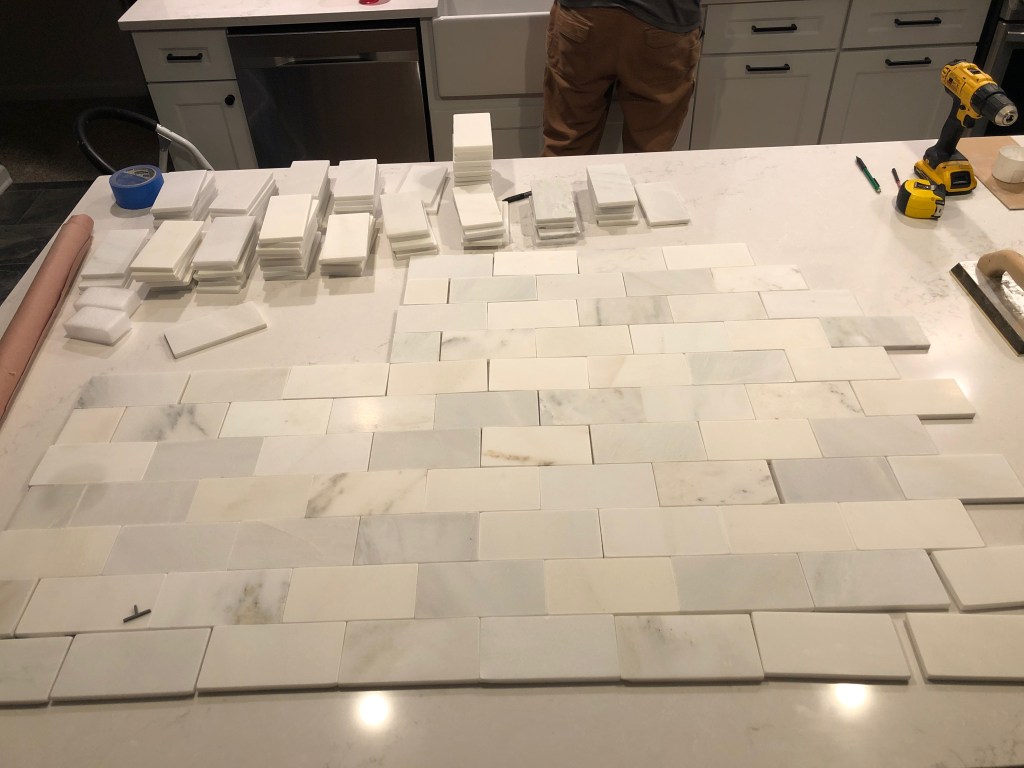
We settled on a brick pattern for our tiles so I set to work laying them out on the counter to plan for how they should go on the wall.

You can see the brick pattern, my piles of color separated tiles and the beginning of the pattern. You want to “randomly” place tiles so you don’t have too many of the same color/pattern tiles next to each other. Ryan loved this method, because it meant I wasn’t handing him tiles to put on the wall and then stepping back and saying “WAIT, that one can’t go there, there’s too many grays!!!” LOL.

Now that you’ve planned, it’s time to install it’s time to PREP. We used blue painter’s tape to tape red rosen paper to our counters (you can also use thick plastic). Tile adhesive and grout are a beast to get off your counters, so cover those babies up and thank me later. Now… drumroll… we tile!

Installing the Tile

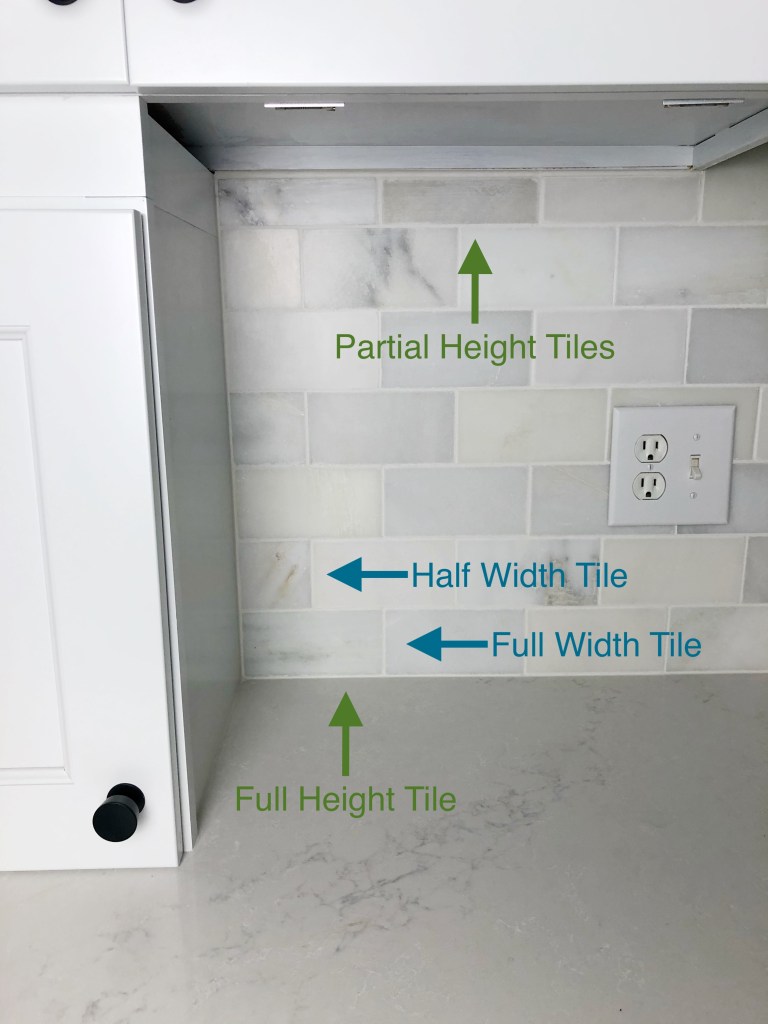
When doing a brick pattern, you’ll want to start at one side of your counters. Don’t start in the middle, it’s just going to make it complicated. We like to put full tiles at the bottom, against the counters, and leave the cuts for the top against the cabinets. To me, this looks best because you’re only going to see up against the cabinets if you’re under 3 feet tall (aka kids, and they don’t care) whereas you’ll see against the counters every day. We started with a full tile on the bottom row, which meant the second row would be a half tile, third row a full, and repeat.

3 Quick Thoughts on Using a Wet Saw

  • Most importantly, if you are not comfortable using a wet saw. Don’t. Find someone who is or someone who will teach you to use one (or even YouTube it!). A wet saw is a power tool, and we don’t take power tools lightly around here.
  • Wear an apron or jacket you don’t love. (Or if you’re me, cut up a trash bag and wear it as a protective suit). Lots of water is going to splash up on you, this will keep you dry longer.
  • Wear eye protection.
It me. Trash bag and goggles is the new fashion trend.

Tips for Install

  • Follow the directions on your tile adhesive — and use a notched trowel to apply the adhesive.
  • Maintain a consistent depth for how far you’re pushing your tile into the adhesive, otherwise you’ll have some tiles sticking further back than others, which gives a wonky look and will make grouting harder. Boo to that.
  • Use the spacers, seriously. That wasn’t just something I lightly suggested to buy. Do it!!! 🙂
  • Don’t put adhesive on your entire wall at once, we went about 6 tiles ahead (approximately 3 feet) so that it wasn’t drying too fast, and we could scrape it off if we ran out of energy and wanted to stop tiling for the night.
  • Use a graphite pencil to mark on your marble tile where you need to make cuts. Markers and pens will bleed into the marble. Learn from our mistakes.
  • Hang on to scrap cuts, you never know when it will come in handy for a partial piece down the line.
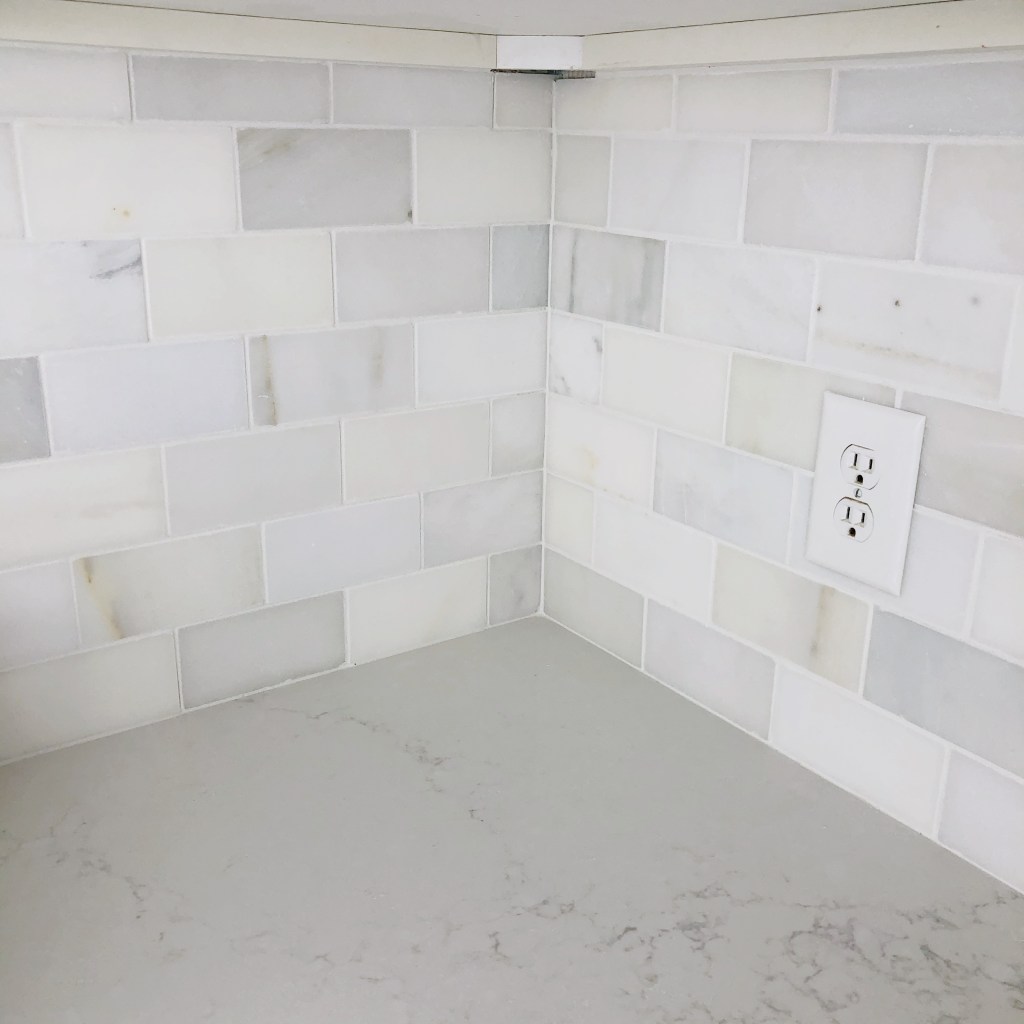
  • Continue the pattern around corners. We got lucky, and our pattern literally continued with the full/half/full repeat at the corner, but if not, continue the pattern. If you end up with a partial tile on one side of the corner, use the remainder of that cut piece to continue the pattern onto the next wall. See below!
That corner wrap though 😉

Tips for Grout

  • We used a pre-mixed grout, it saved us time and energy (and only cost a little more).
  • Use an unsanded grout if your grout lines are thinner than 1/2″. It’s easier to apply and clean off.
  • Use a rubber grout float, and apply the grout at 45 degree angles to the tile. This will prevent you from chipping corners of the tile and will ensure your grout is spread evenly through the grout lines.
  • Follow the instructions for how long to let the grout set in the tile and then wipe it off thoroughly. We used 3 sponges so we had a constant rotation of one being used, one being cleaned, and one ready waiting. You only get about 3 swipes per side of the sponge (6 total) before it needs to be washed off, so make those swipes count!

Done? NO!

Your outlets need to be flush with the tile which is now significantly thicker than your pre-backsplash life. You’ll want to use outlet extenders to make the tiles flush while still allowing them to be secured to the electrical box. If you do not do this step, your outlets will “wiggle” and you are creating an electrical hazard!

Marble tile also needs to be sealed. Use the same tile sealer you used to seal your tiles when you prepped. Seal your tile and plan to have to clean and reseal it every year. We just followed the instructions on the box, 10 minutes tops – easy peasy. It’ll keep those beauties looking as good as the first day you installed 🙂

Our Backsplash

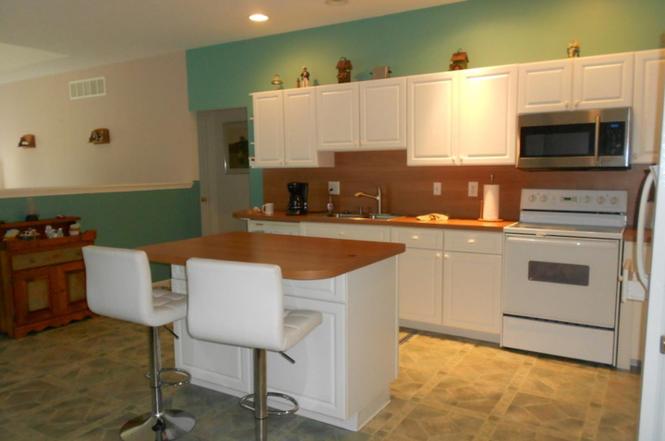
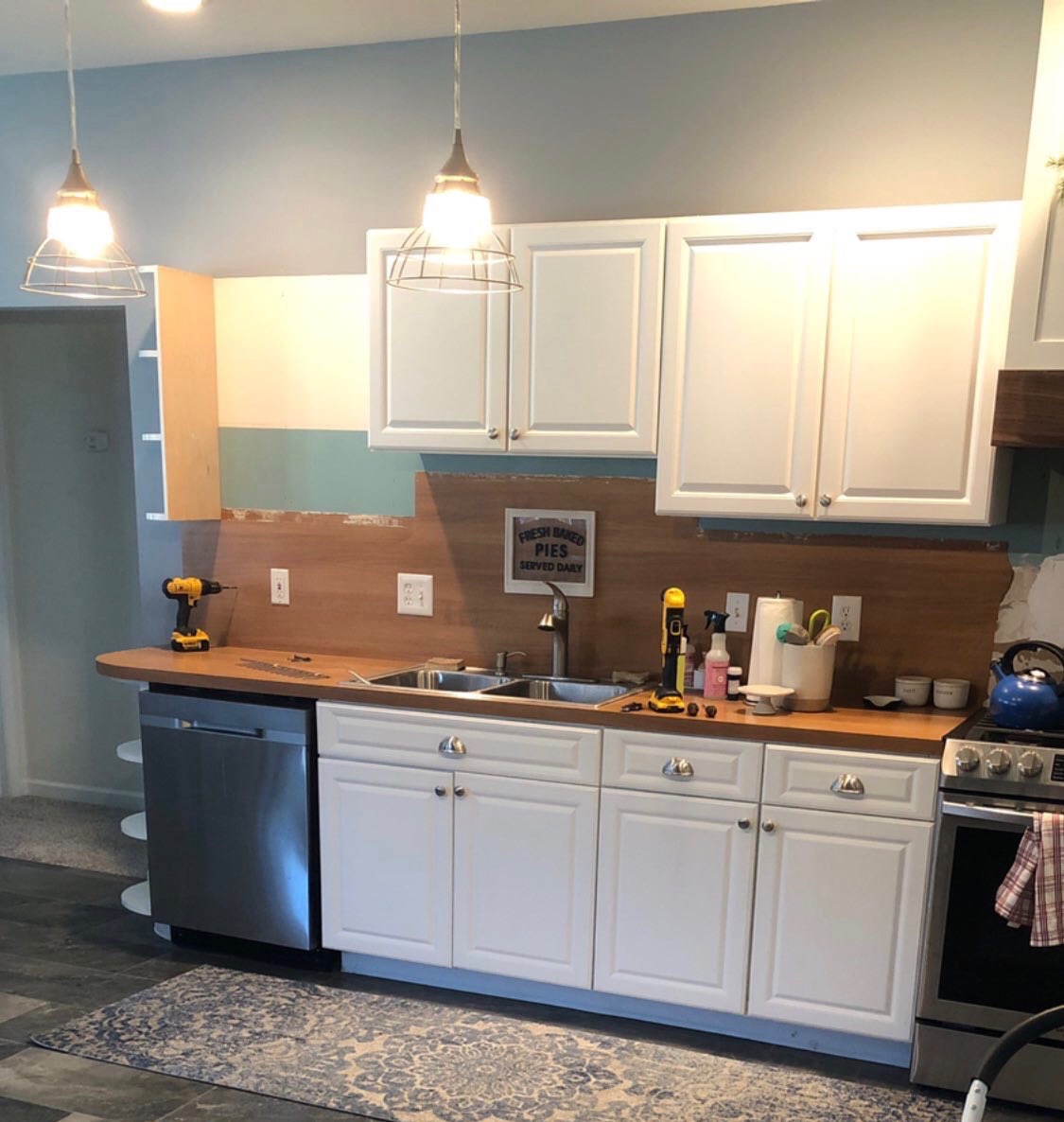
Now for the best part. Results pictures! One last quick look at the before:

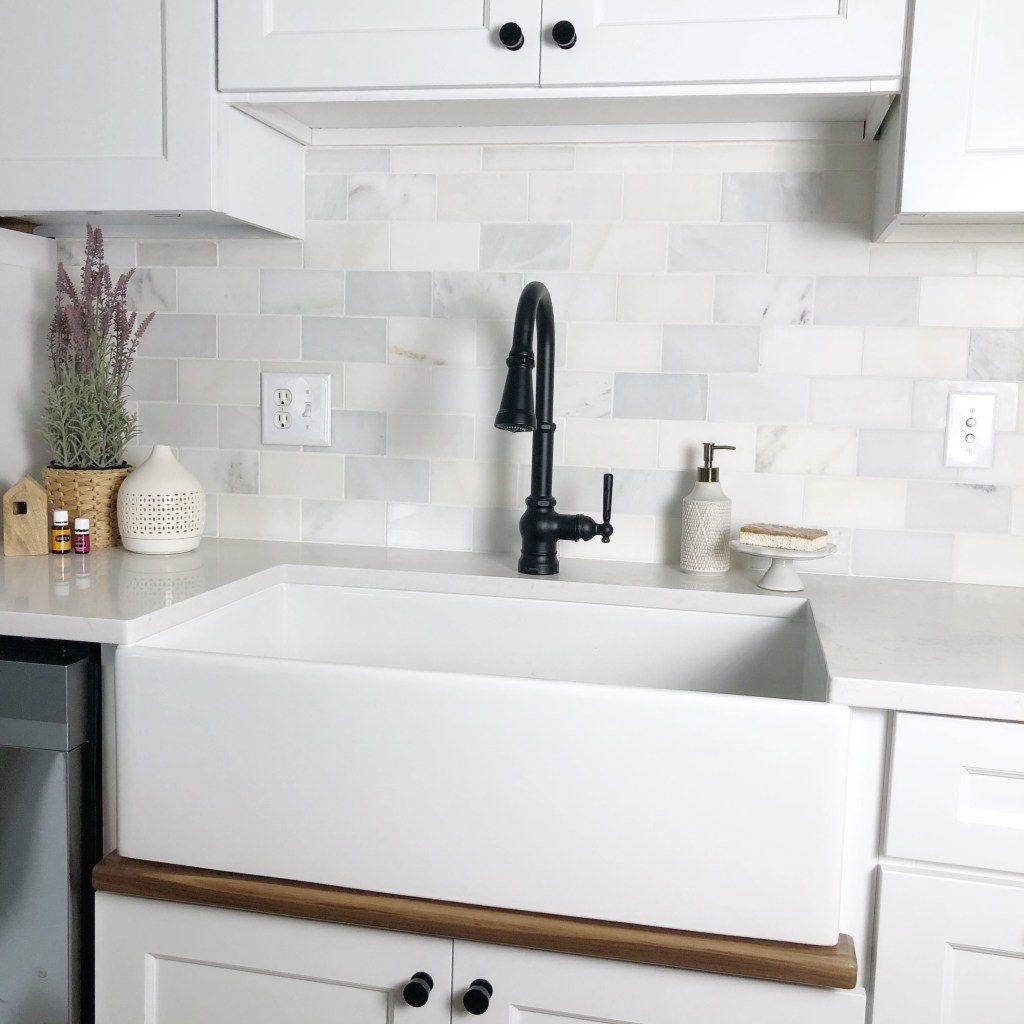
And the after!

Total Cost Breakdown

  • Tile (36 sq. ft) – $298.42
  • Tile Adhesive – Leftover from a previous project
  • Grout – $44.99
  • Tile Sealer – $29.27
  • Spacers – $10.96
  • Caulk (2 tubes) – $15.00
  • Sponges – $3.94
  • Outlet Extenders – $7.98
  • Wet Saw – borrowed
  • Notched Trowel – borrowed
  • Rubber Grout Float – borrowed
  • 1 Trash Bag Protective Suit 😉 – $0.01

Total = $410.56 & Project Time = 1 Weekend

Summary

What do you think? And would you tackle a project like this? I’d love to hear in the comments below!